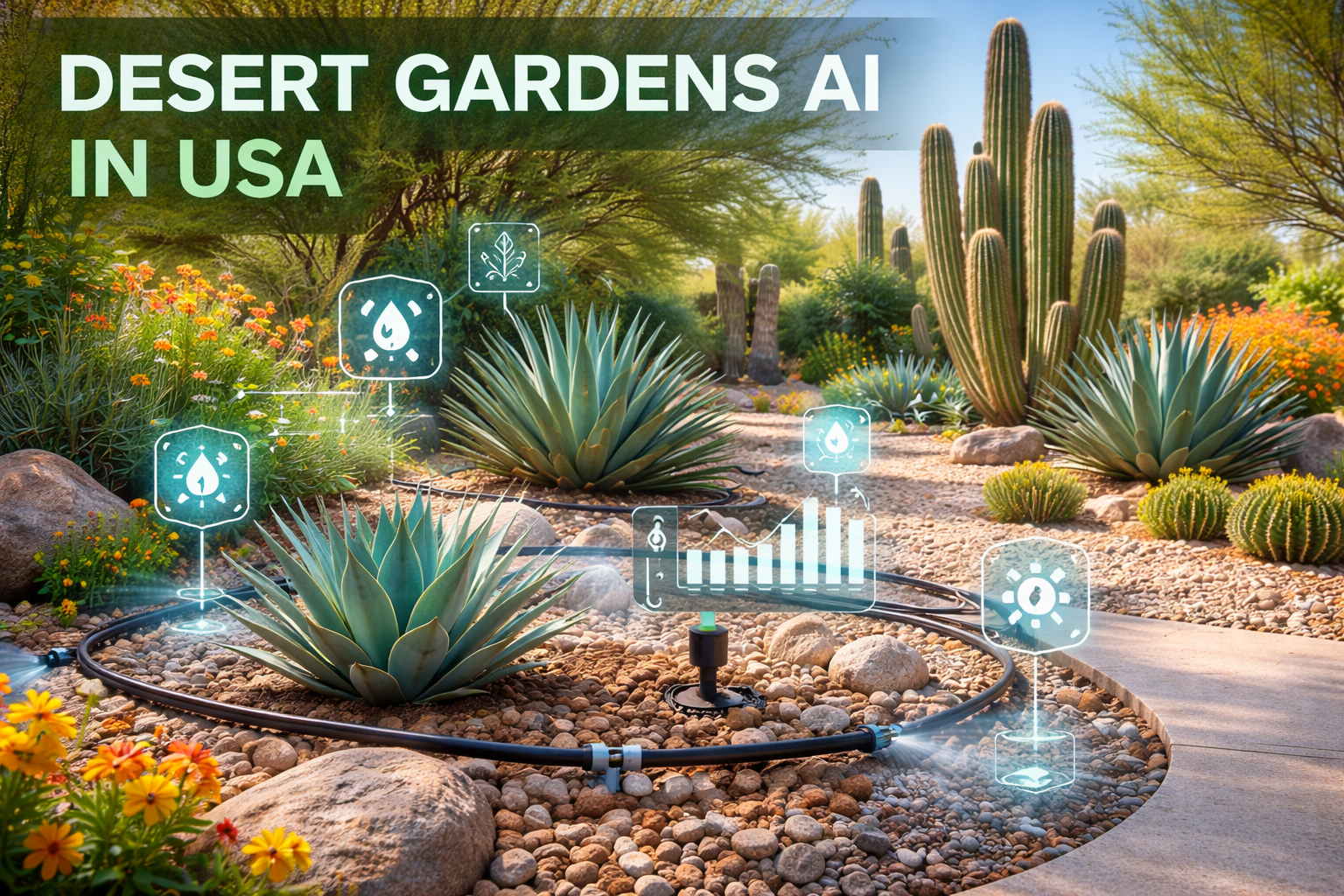
Desert landscapes across the United States demand thoughtful planning, efficient water use, and climate-aware maintenance. Desert gardens AI is emerging as a powerful solution that blends artificial intelligence with sustainable landscaping practices to help property owners design, manage, and maintain desert-friendly gardens more effectively. From homeowners in arid regions to commercial developers, AI-driven tools are transforming how desert gardens are planned and sustained.
As climate challenges intensify, desert gardens AI in USA is becoming increasingly relevant. It offers data-driven insights that reduce water waste, improve plant health, and lower long-term maintenance costs. These intelligent systems are not about replacing human expertise but enhancing it with precision and predictive analysis.
Understanding Desert Gardens AI
Desert gardens AI refers to the use of artificial intelligence technologies to plan, monitor, and optimize gardens designed for arid and semi-arid environments. These systems analyze soil conditions, weather patterns, plant requirements, and irrigation data to deliver customized recommendations. The result is a garden that thrives naturally while conserving resources.
In the USA, desert gardens AI supports regions where water scarcity and extreme temperatures are common. By leveraging real-time data and machine learning models, AI helps gardeners and landscapers make informed decisions that align with environmental conditions.
Why Desert Gardens AI Matters in the USA
The adoption of desert gardens in USA addresses critical environmental and economic challenges. Water conservation is a major concern in states like Arizona, Nevada, California, and parts of Texas. AI-powered solutions optimize irrigation schedules, ensuring plants receive only the water they need.
Another key benefit is resilience. AI systems can predict stress factors such as heatwaves or drought conditions and suggest preventive actions. This proactive approach reduces plant loss and enhances the long-term sustainability of desert landscapes.
AI-Driven Garden Design for Arid Climates
Designing a desert garden requires careful plant selection and layout planning. Desert gardens AI analyzes regional climate data and soil profiles to recommend native and drought-tolerant plants. These recommendations help create visually appealing gardens that naturally adapt to their environment.
AI also assists with spatial planning, ensuring plants are positioned to maximize shade, airflow, and water efficiency. This intelligent design process supports smart desert landscape planning, making gardens both functional and aesthetically pleasing.
Intelligent Irrigation and Water Management
Water efficiency is at the core of desert gardens. Advanced systems integrate with smart irrigation controllers to adjust watering schedules based on real-time weather forecasts and soil moisture levels. This eliminates guesswork and significantly reduces water waste.
In the USA, where water regulations are becoming stricter, AI-based irrigation solutions help property owners remain compliant while maintaining healthy landscapes. Over time, these systems can lead to substantial cost savings and environmental benefits.
Monitoring Plant Health With AI
Desert gardens uses sensors and image analysis to monitor plant health continuously. By detecting early signs of stress, disease, or nutrient deficiency, AI allows for timely intervention. This reduces the need for excessive fertilizers or chemical treatments.
Healthy plants contribute to a balanced ecosystem and require less maintenance. AI-driven monitoring ensures that desert gardens USA remain vibrant and resilient even under challenging conditions.
Commercial Applications of Desert Gardens AI
Beyond residential use, desert gardens is gaining traction in commercial and public spaces. Hotels, office complexes, and municipal projects use AI to maintain large-scale desert landscapes efficiently. These environments benefit from consistent quality and reduced operational costs.
For developers and property managers, AI provides actionable insights that support long-term planning. This includes budgeting for maintenance, forecasting resource usage, and ensuring compliance with environmental standards.
Environmental and Economic Benefits
The environmental impact of desert gardens extends beyond water conservation. By promoting native plant species and reducing chemical inputs, AI supports biodiversity and soil health. These practices align with broader sustainability goals and climate resilience strategies.
Economically, desert gardens reduces labor costs and resource waste. Over time, property owners experience a strong return on investment through lower maintenance expenses and increased property value. This balance of cost efficiency and environmental responsibility makes AI an attractive option.
Integrating Human Expertise With AI
While desert gardens offers powerful tools, human expertise remains essential. Landscapers, horticulturists, and designers interpret AI insights and apply them creatively. This collaboration ensures that gardens are not only efficient but also visually compelling and culturally appropriate.
AI serves as a decision-support system, empowering professionals rather than replacing them. This partnership results in landscapes that reflect both scientific precision and artistic vision.
Choosing the Right Desert Gardens AI Solution
Selecting the right AI solution involves understanding specific needs and goals. Factors such as garden size, climate zone, and budget play a role in determining the most suitable system. Reputable providers of desert gardens service in USA offer scalable solutions that adapt to different project requirements.
Before implementation, it is important to evaluate data accuracy, system integration, and ongoing support. Reliable AI platforms prioritize transparency and user-friendly interfaces to ensure long-term success.
Future Trends in Desert Gardens AI
The future of desert gardens looks promising as technology continues to evolve. Advancements in machine learning and sensor technology will enhance predictive accuracy and automation. This will further simplify garden management while improving outcomes.
As awareness grows, desert gardens in USA is likely to become a standard practice in sustainable landscaping. Its ability to combine innovation with environmental stewardship positions it as a key driver of future landscape design.
Throughout this evolution, AI-powered desert landscaping, water-efficient garden systems, and sustainable arid design solutions will remain central themes shaping the industry.
FAQ
- What is desert gardens AI?
Desert gardens service uses artificial intelligence to design, manage, and optimize gardens in arid environments through data-driven insights. - How does desert gardens AI help conserve water?
It adjusts irrigation schedules based on weather and soil data, ensuring efficient water use. - Is desert gardens AI suitable for residential use in the USA?
Yes, it is widely used by homeowners in arid regions to maintain healthy, low-maintenance gardens. - Can desert gardens AI improve plant health?
AI monitors plant conditions and detects early stress, allowing timely care and intervention. - What makes desert gardens AI in USA different?
It is tailored to U.S. climate zones, regulations, and sustainability standards.